Choosing the right Walk Behind Scrubber can greatly influence your business efficiency. The upcoming Canton Fair in 2026 offers a perfect platform for making informed decisions. It showcases advanced manufacturing and cleaning technologies, essential for maintaining cleanliness in various environments.
As you navigate this massive exhibition, consider how AI-enabled features enhance your search for suitable suppliers. Look for Walk Behind Scrubber models equipped with ISO and CE certifications. These indicators signify quality and reliability. However, identifying the best machine can be challenging.
Note that not all products meet the high standards required for optimal performance. Some exhibitors may exaggerate the capabilities of their Walk Behind Scrubbers. Assessing their actual effectiveness requires diligent research and perhaps some trial and error. Keep your needs in focus and reflect on the long-term benefits of your choices.

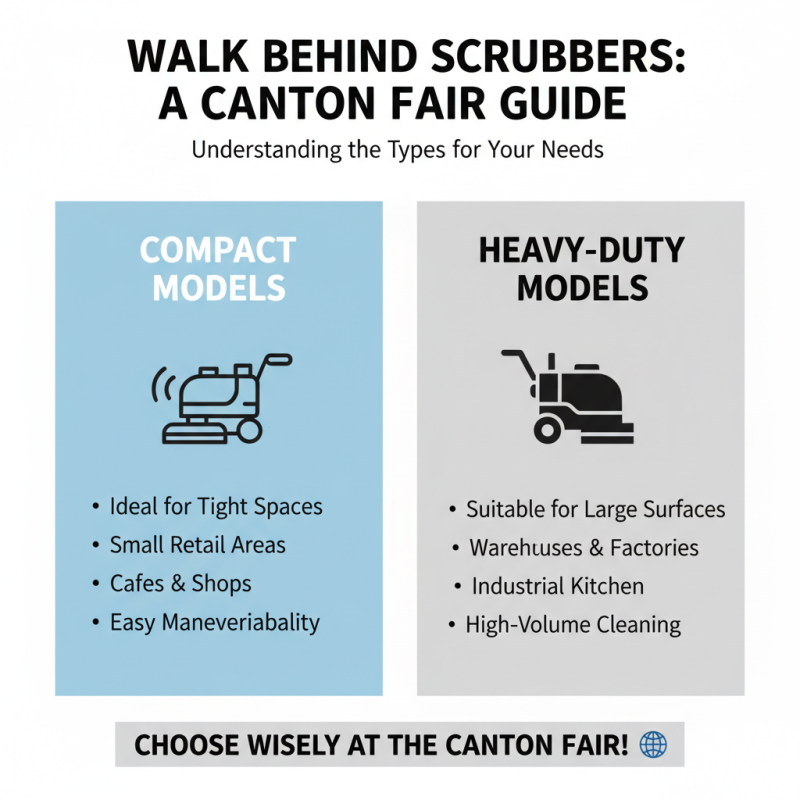
When attending the Canton Fair, understanding the different types of walk behind scrubbers is crucial. Walk behind scrubbers come in various forms, each designed for specific cleaning tasks. For example, some models are compact, making them ideal for tight spaces, like small retail areas. Others are heavier-duty, suitable for larger surfaces, such as warehouses or factories.
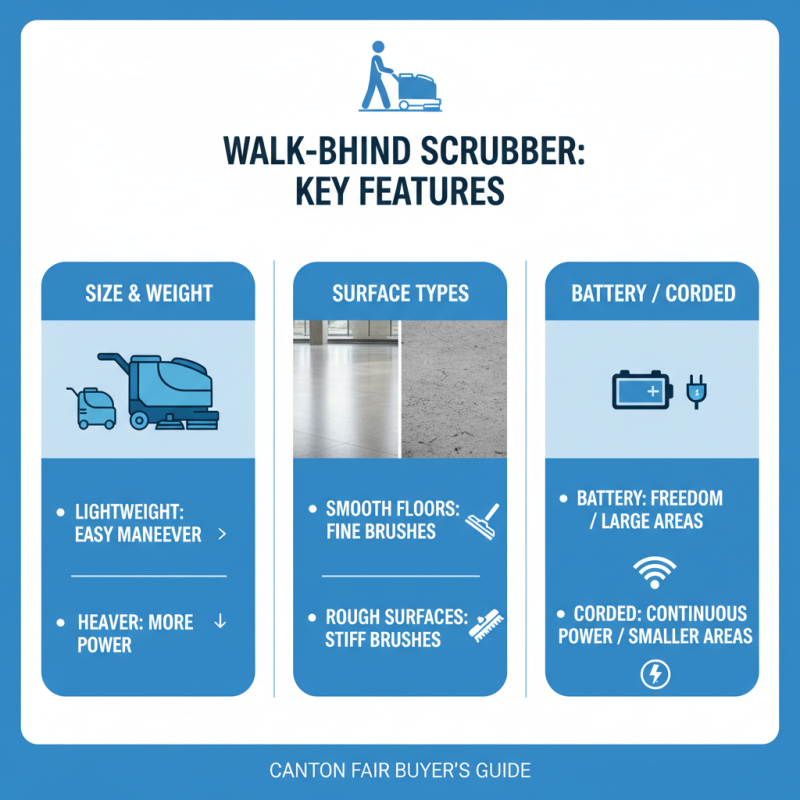
Battery-operated scrubbers offer mobility and ease of use. They don’t have cords to worry about, so you can clean without restrictions. However, battery life can be a concern. It's important to know how long a full charge lasts. Manual scrubbing models may require more physical effort, but they can be cheaper and simpler to maintain. Think about the cleaning frequency and surface type when selecting a model.
Don’t forget to consider the water and detergent systems. Some scrubbers provide automated systems, while others give you control. Each has its benefits, but it’s crucial to evaluate which method fits your needs best. A thoughtful choice means more efficient cleaning. Yet, even the best scrubbers may struggle with stubborn stains. Reflect on your choices and how they align with your cleaning objectives.

Choosing the right walk-behind scrubber at a trade fair like Canton Fair can be daunting. Several features must be taken into account. One key aspect is the machine's size and weight. A lightweight scrubber is easier to maneuver, but a heavier model may provide better scrubbing power. Consider the types of surfaces you will clean. Some models work best on smooth floors, while others are designed for rough surfaces.
Another critical feature is the tank capacity. A larger tank means less frequent refills, saving time and effort. However, heavier scrubbers can be cumbersome. Pay attention to battery life as well. A scrubber that runs out of power midway through cleaning can be a significant hassle. Look for models that offer long run times.
Lastly, examine the scrub brush types. Different brushes suit various cleaning applications. Some might scratch certain finishes, while others may not clean effectively. It’s essential to strike a balance between scrubbing efficiency and surface protection. Thus, do your research. Make informed choices but expect some trials and errors. Each decision shapes your cleaning approach.
Choosing the right walk behind scrubber requires understanding its performance and efficiency. A recent industry report indicates that scrubbers can improve cleaning efficiency by up to 70%. This is significant for large facilities where time is critical. A machine with a high scrub rate can cover more ground, ensuring thorough cleaning in less time.
Consider the water consumption of the scrubber. Some models use as little as 0.5 gallons per minute. This can lead to savings on both water bills and labor costs. Efficiency in performance is not just about speed. It’s also about how well the scrubber removes dirt and grime. Data shows that scrubbers with dual scrub brushes outperform single brushes in removing tough stains.
Another factor is maintenance. Regular upkeep is essential for any machine. A neglected scrubber may lose efficiency. It becomes less effective over time. Manufacturers often recommend daily checks and weekly maintenance. This simplifies the process and enhances longevity. However, many users overlook this step.
Evaluating these aspects at the Canton Fair can help you make an informed decision. The ideal scrubber matches efficiency with ease of maintenance. Investing in a quality scrubber is crucial for operational efficiency. Remember, it’s not just about buying equipment, but understanding its long-term impact on your cleaning operations.
| Model | Cleaning Width (inches) | Max Run Time (minutes) | Tank Capacity (gallons) | Weight (lbs) | Noise Level (dB) |
|---|---|---|---|---|---|
| Model A | 20 | 120 | 10 | 150 | 70 |
| Model B | 22 | 150 | 12 | 160 | 68 |
| Model C | 24 | 180 | 15 | 170 | 65 |
| Model D | 26 | 210 | 18 | 180 | 64 |
Choosing the right walk-behind scrubber requires a deep understanding of your specific cleaning needs and environment. Factors like floor type, size, and frequency of cleaning should guide your decision. According to a study by the Cleaning Equipment Trade Association, 70% of cleaning professionals emphasize that floor surface impacts scrubber performance significantly. For instance, a textured surface demands more rigorous scrubbing to achieve optimal cleanliness.
Understanding the environment is crucial. Facilities with high foot traffic, such as hospitals, often need more powerful machines. The International Sanitary Supply Association reports that 34% of cleaning personnel cite inadequate equipment as a barrier to effective cleaning. In contrast, less trafficked areas may benefit from smaller, more maneuverable models. There's no universal answer; sometimes, what works for one setting might falter in another.
It's easy to overlook maintenance and support when selecting a scrubber. Even the best equipment can fail if not properly maintained. A survey by Facility Cleaning Services found that 40% of operators reported issues stemming from poor maintenance. Choosing the right scrubber means not just understanding initial needs, but also being prepared for ongoing care and potential upgrades. Balancing these factors will ultimately guide you to the right choice.
When attending the Canton Fair, understanding your budget is crucial for selecting the right walk-behind scrubber. Recent industry reports indicate that purchasing decisions often rely heavily on financial constraints. A typical walk-behind scrubber costs between $1,500 and $5,000, depending on its features and performance specifications.
It's essential to assess your specific needs before making a decision. For example, larger facilities may require more powerful models, which come at a higher price. However, smaller businesses might find success with more economical options. Remember that while saving costs is important, investing in quality can save money on repairs and replacements over time.
In the past, many buyers underestimated maintenance costs. Neglecting this aspect led to unexpected expenses. Additionally, hidden costs, like shipping and warranties, can impact your budget. Being aware of these factors can prevent overspending. A balanced approach to budgeting allows you to choose a scrubber that meets your needs without compromising on quality or performance.