How to Choose the Best Ride On Floor Scrubber
Choosing the right Ride On Floor Scrubber is not simply a matter of selecting the largest machine. It requires evidence, practical testing, and a clear understanding of the facility. Warehouses, supermarkets, airports, and production plants face different floor conditions every day. A polished shopping aisle needs quiet operation. A dusty concrete warehouse needs stronger water recovery and brush pressure. Small details matter.
Industry reports support this careful approach. Grand View Research identifies industrial floor-cleaning equipment as a growing market, driven by automation, hygiene expectations, and labor efficiency. MarketsandMarkets also highlights rising demand for automated cleaning equipment across commercial and industrial facilities. These reports show market direction, not a guarantee for every buyer. That distinction matters. A machine can appear efficient on paper but perform poorly around narrow aisles or frequent obstacles.
Real operating data should guide the decision. Measure the cleaning width, battery runtime, tank capacity, turning radius, noise level, and recovery performance. ISSA guidance also emphasizes consistent cleaning procedures, worker training, and measurable results. A scrubber that leaves dirty water behind is not efficient, regardless of its advertised speed. Watch the squeegee after several passes. Check the floor before it dries.
No machine fits every site. That is the honest part. Buyers should compare labor savings against battery replacement, brush wear, maintenance access, and operator comfort. Demonstrations are valuable, but one short test can mislead. Test during normal traffic, with realistic soil, and on the hardest floor section. The best Ride On Floor Scrubber is the one that performs reliably when conditions are inconvenient, not merely when the showroom floor is clean.
Define Cleaning Requirements and Facility Conditions
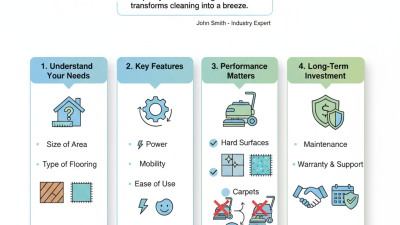
Before comparing machines, map the actual cleaning work.
Note floor types, soil levels, aisle widths, ramps, drains, and obstacles such as pallet corners. The U.S. Energy Information Administration’s 2018 Commercial Buildings Energy Consumption Survey counted about 5.9 million commercial buildings, covering roughly 96 billion square feet. That variety matters: a machine suited to a clear warehouse may struggle in a crowded clinic or narrow retail aisle. Measure the tightest turn, not just the widest corridor. Measure it.
Estimate how much floor must be cleaned per shift, then check practical cleaning rate, battery runtime, tank capacity, and refill access. Manufacturer-rated coverage can be optimistic; turns, overlaps, and heavy soil slow real work. A small timed trial on representative flooring is more useful than a showroom demonstration. Watch for residue after drying, noise near occupied areas, and whether the operator can see around shelving. One detail is easy to overlook: frequent stops can make a high-capacity machine a poor fit.
Tips: Walk the route with a tape measure and record narrow points, slopes, and floor transitions. Test during a normal shift, not an empty-building period. Include refill and charging time in the trial. If the result feels borderline, revisit the route assumptions before choosing a larger scrubber.
Compare Scrubber Types, Sizes, and Maneuverability
Choosing a ride-on floor scrubber starts with the floor, not the machine’s advertised capacity.
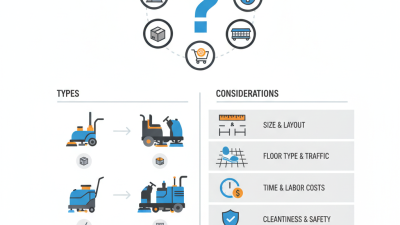
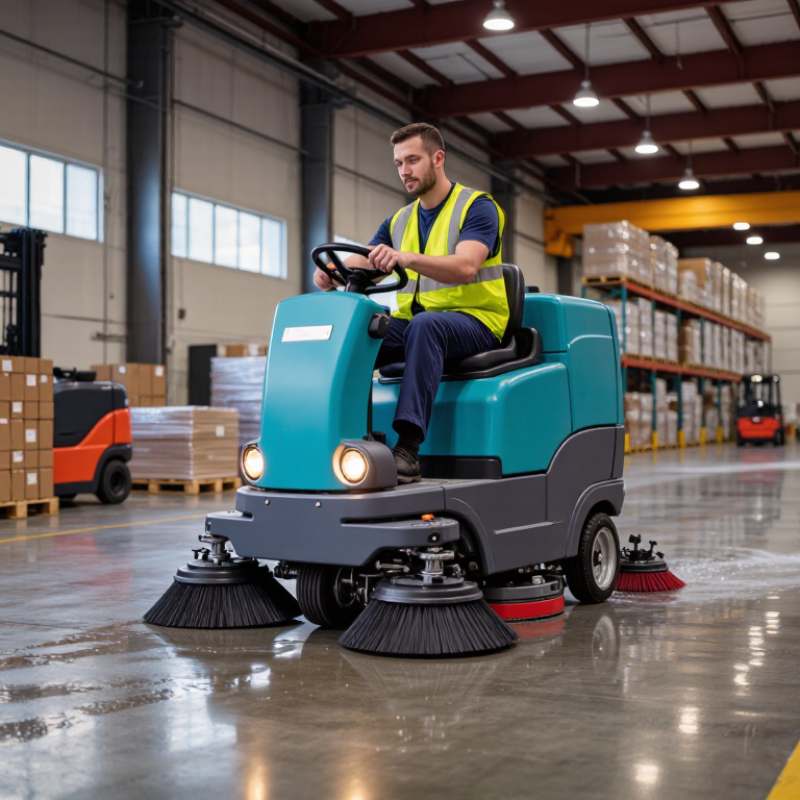
Compact models suit crowded aisles, small clinics, and rooms with frequent obstacles. Mid-size machines cover warehouses and schools faster, but they need wider turning space. Large units can reduce cleaning time on open floors. They become awkward near shelving, doorways, and uneven transitions. Measure the narrowest route before comparing tank volume.
Disc scrubbers work well on smooth, regularly maintained floors. Cylindrical brushes can reach shallow grout lines and collect light debris during cleaning. Orbital systems may help with delicate surfaces and controlled chemical use.
Each type has limits. A pre-sweep test matters. Do not choose by brush type alone. Floor texture, soil level, and water recovery affect the result.
Maneuverability deserves a hands-on check.
Test the turning radius between racks, around columns, and beside toilets. Watch the rear corner while reversing. Controls should be readable, responsive, and usable with gloves. Test it empty. Then test it loaded. A full tank changes handling, braking, and stopping distance. Practical evaluations often reveal problems that specification sheets miss.
One detail is easy to overlook: longer runtime is not always better.
A larger battery can increase weight, charging time, and service cost. I would compare cleaning width, operator visibility, maintenance access, and actual aisle performance before accepting a higher capacity as an advantage.
Assess Operator Comfort, Safety, and Maintenance Needs
How to Choose the Best Ride On Floor Scrubber
Operator comfort directly affects cleaning quality, fatigue, and safe machine control. The U.S. Bureau of Labor Statistics reported over 888,000 private-industry injuries requiring days away, restriction, or job transfer in 2022. Many involved musculoskeletal strain or falls. A ride-on scrubber should provide an adjustable seat, clear foot positioning, low-vibration controls, and steering that does not require constant wrist pressure. Fit matters. An operator should reach every control without twisting the torso. A short trial on wet flooring can reveal more than a product brochure.
Safety details deserve close inspection. OSHA identifies slips, trips, and falls as a major workplace hazard, so check the scrubber’s visibility, braking response, warning alarms, and turning stability. The National Institute for Occupational Safety and Health recommends reducing forceful exertion and awkward postures, which supports choosing simple, responsive controls. Noise matters. The European Environment Agency reports that prolonged environmental noise can affect health and concentration, making quieter equipment valuable in occupied buildings. Yet “quiet” does not always mean safe; alarms must remain noticeable.
Maintenance needs are less glamorous, but they determine uptime. Look for tool-free access to squeegees, tanks, filters, and recovery hoses. The ISSA Cleaning Industry Management Standard emphasizes documented procedures, training, and performance measurement. Record daily water recovery, brush wear, battery condition, and error codes. A minor weakness remains: operators may skip inspections during busy shifts. A practical machine should make that mistake harder, not merely blame the user.
Calculate Total Cost and Select the Right Model
Choosing the best ride-on floor scrubber starts with total cost, not the purchase price. A low-cost machine may consume more water, batteries, labor, and repair time. Record the cleaning area, daily operating hours, floor type, and available storage space. These details define the machine you actually need.
Calculate purchase price, delivery, operator training, brushes, pads, batteries, charging equipment, detergent, maintenance, and disposal costs. Then divide the estimated annual cost by the number of cleaning hours. This gives a practical cost per operating hour.
Include downtime. One broken squeegee can delay an entire shift. A model with a larger tank may reduce refilling trips, but it can increase weight and energy use. Bigger is not always better.
Match the machine to real working conditions. Choose a compact model for narrow aisles and crowded facilities. Select wider cleaning coverage for warehouses with long, open floors.
Check turning radius, noise level, battery runtime, recovery capacity, and access to service parts. I once underestimated doorway width, and the machine required an awkward route between buildings. That mistake changed my selection process.
Measurements are essential. A spreadsheet also cannot predict every operator habit. Test the controls, visibility, and seat comfort with actual staff before purchasing. A reliable decision combines measured costs with hands-on experience.