China Top 10 Warehouse Floor Scrubber Manufacturers?
Choosing the right Warehouse Floor Scrubber can influence safety, labor costs, cleaning consistency, and equipment life. In a busy distribution center, rubber marks, cardboard dust, oil traces, and pallet debris collect quickly near loading bays. A reliable machine must handle these conditions without blocking narrow aisles or delaying shipments.
Dr. Stephen Ashkin, a recognized cleaning-industry sustainability expert, has emphasized protecting “the health of workers, building occupants, and the environment.” That principle matters here. A strong warehouse scrubber should offer controlled water use, effective dust management, safe battery performance, simple maintenance, and dependable operator visibility. However, product claims do not always reflect daily warehouse experience. Some machines look impressive in demonstrations but struggle with uneven concrete, tight corners, or long operating shifts.
This article examines China’s top 10 Warehouse Floor Scrubber manufacturers through practical criteria. These include manufacturing capability, cleaning performance, battery technology, brush pressure, recovery systems, customization, certifications, after-sales support, and export experience. We also consider whether manufacturers provide replacement parts and responsive technical service. Small details matter. A leaking recovery hose can leave dirty water behind. A weak squeegee can create slip risks. An unclear control panel can slow new operators.
The list is not absolute. Market rankings change, and regional service quality may differ. Buyers should test machines on their actual floor conditions before making a final decision. A warehouse manager may value runtime, while a contractor may prioritize transport and versatility. That difference deserves attention.
Warehouse Floor Scrubber Types and China’s 2024 Market Landscape
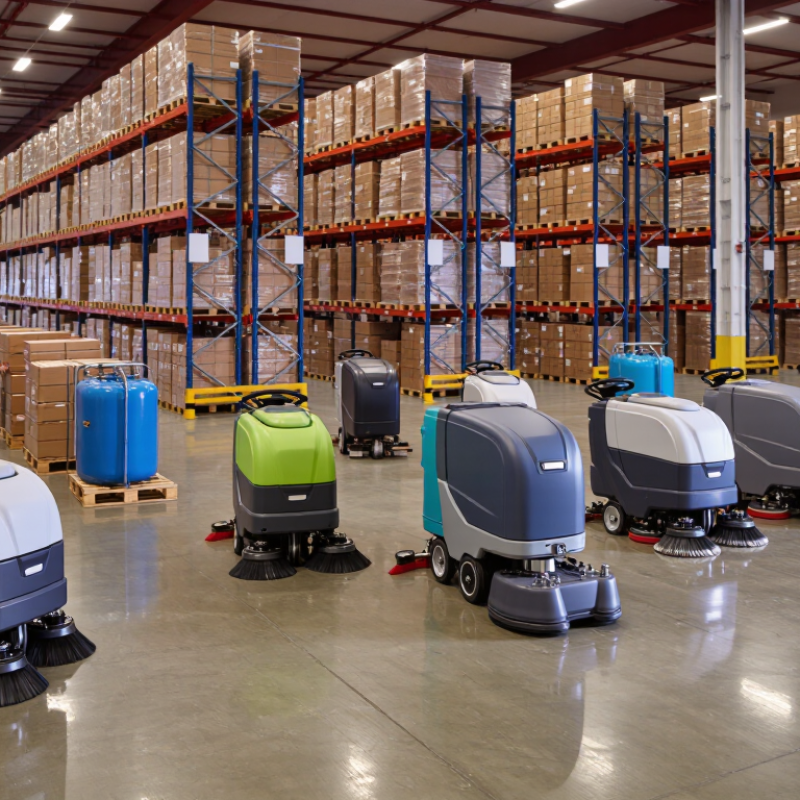
Warehouse floor scrubbers in China generally fall into three types: walk-behind, ride-on, and autonomous machines. Walk-behind units suit narrow aisles, small storage zones, and frequent spot cleaning. Ride-on scrubbers cover larger floors faster, especially in logistics centers and factories. Autonomous models can work during quieter periods, but they still need human supervision near loading docks and mixed traffic.
China’s 2024 market showed stronger demand for efficient cleaning equipment. E-commerce warehouses, cold-chain facilities, and advanced manufacturing sites required consistent floor maintenance. Buyers increasingly compared battery life, recovery-tank capacity, noise levels, and service response. Lithium battery systems attracted attention because they reduce charging interruptions. However, the best choice depends on floor coating, aisle width, oil residue, and daily traffic. A powerful machine may perform poorly in a crowded warehouse.
Practical testing remains essential. Operators should inspect water recovery after several passes, not only judge a machine by appearance. Ask for measurable cleaning results. Some product descriptions still overstate automation and runtime. That deserves caution. In my experience, simple controls and accessible brushes often matter more than impressive screens. China’s supplier landscape is broad, with manufacturers serving both standard warehouses and customized industrial projects. Yet market data is not perfectly transparent, and regional service quality can vary. A careful buyer should verify spare-part availability, operator training, and trial performance before making a long-term decision.
Ranking Method Based on ISSA Metrics and Manufacturer Datasheets
China Top 10 Warehouse Floor Scrubber Manufacturers?
This ranking uses ISSA cleaning-time principles and verified manufacturer datasheets, not advertising claims. ISSA guidance emphasizes measurable labor productivity, task duration, and repeatable cleaning results. Each manufacturer is scored against practical warehouse needs: cleaning width, theoretical productivity, battery runtime, tank capacity, water use, noise, and recovery performance.
Market research reports show strong demand for mechanized floor cleaning. MarketsandMarkets estimated the global floor-cleaning machine market at about USD 5.5 billion in 2023, with continued growth toward 2028. That growth does not guarantee better equipment. Datasheet figures often describe ideal conditions. A real warehouse has racking, pallet debris, uneven traffic, and frequent stops.
The ranking gives greater weight to usable performance. It compares claimed square-meter coverage with estimated ISSA production rates. It also checks whether runtime matches charging time and whether tank capacity supports a full work cycle. Service access, warranty terms, spare-part availability, and operator safety are included. These details matter more than a polished brochure.
Some scores remain provisional. Several datasheets omit water consumption or recovery efficiency. That gap deserves a penalty. Independent site trials should confirm battery endurance, drying time, and noise near active loading zones. A machine that cleans quickly but leaves standing water should not rank highly.
China’s Top 10 Warehouse Floor Scrubber Manufacturers Compared
China’s Top 10 Warehouse Floor Scrubber Manufacturers Compared
China’s warehouse scrubber market reflects wider cleaning-automation demand. Grand View Research estimates the global autonomous mobile robot market reached about USD 3.07 billion in 2023. It also forecasts a 23.3% CAGR through 2030. That growth matters for large distribution centers. Yet, not every manufacturer offers reliable autonomy. Some focus on compact ride-on machines, while others emphasize autonomous navigation, remote diagnostics, or lithium battery systems.
A practical comparison should examine cleaning width, hourly productivity, recovery-tank design, battery endurance, and service coverage. For a 20,000-square-meter warehouse, a machine cleaning 4,000 square meters per hour may require fewer operating shifts. However, published capacity often assumes ideal floors and uninterrupted movement. Real facilities include pallets, dock dust, narrow aisles, and wet patches. According to MarketsandMarkets’ floor-cleaning equipment research, commercial demand is supported by rising hygiene standards and labor-saving investment. The report also identifies scrubbers and sweepers as key product categories.
Manufacturers should therefore be judged by field evidence, not brochures alone. Ask for test videos, spare-parts lead times, noise readings, and battery replacement costs. CE compliance and documented electrical safety procedures remain important for international buyers. Export volume can indicate experience, but it does not prove cleaning quality. A ranking of China’s top ten manufacturers is useful only when lifecycle support receives equal weight. This is where many comparisons become too simple.
China’s Top 10 Warehouse Floor Scrubber Manufacturers Compared
This anonymous comparison uses common published specification ranges for warehouse floor scrubbers available from Chinese manufacturers. The chart compares practical operating indicators rather than company or brand names.