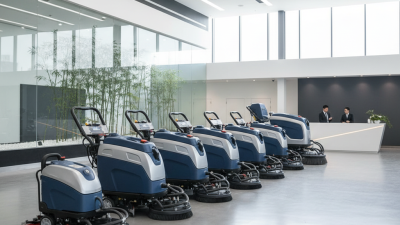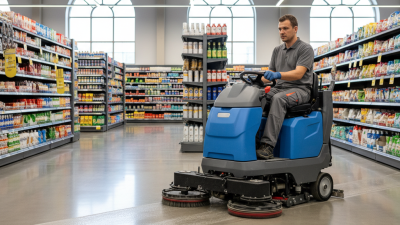
Choosing an Industrial Floor Scrubber is not simply a matter of buying the largest machine. The right choice depends on floor type, cleaning demand, available labor, and site conditions. A compact warehouse may need a different solution from a food-processing plant or hospital corridor. I have seen attractive machines perform poorly when their brush pressure, turning radius, or recovery capacity did not match the facility. Small details matter.
This guide examines the practical decisions behind a dependable purchase. It considers walk-behind and ride-on designs, battery life, tank capacity, brush systems, drying performance, noise, maintenance, and operator safety. Manufacturer specifications provide a useful starting point, but they do not tell the whole story. A machine rated for high coverage may lose efficiency around racks, drains, or crowded production lines. Ask suppliers for demonstrations on your actual floor, not only polished showroom surfaces. Measure cleaning time, water use, drying results, and operator comfort.
Reliable selection also requires honest attention to long-term costs. Consumables, replacement batteries, service access, training, and downtime can outweigh the initial price. Environmental requirements may influence detergent use and water recovery, too. There is no perfect machine. Even experienced buyers can overlook a narrow doorway or sloped loading area. Review manufacturer manuals, safety guidance, and service records before deciding. A thoughtful choice should leave floors cleaner, workers safer, and maintenance more predictable.
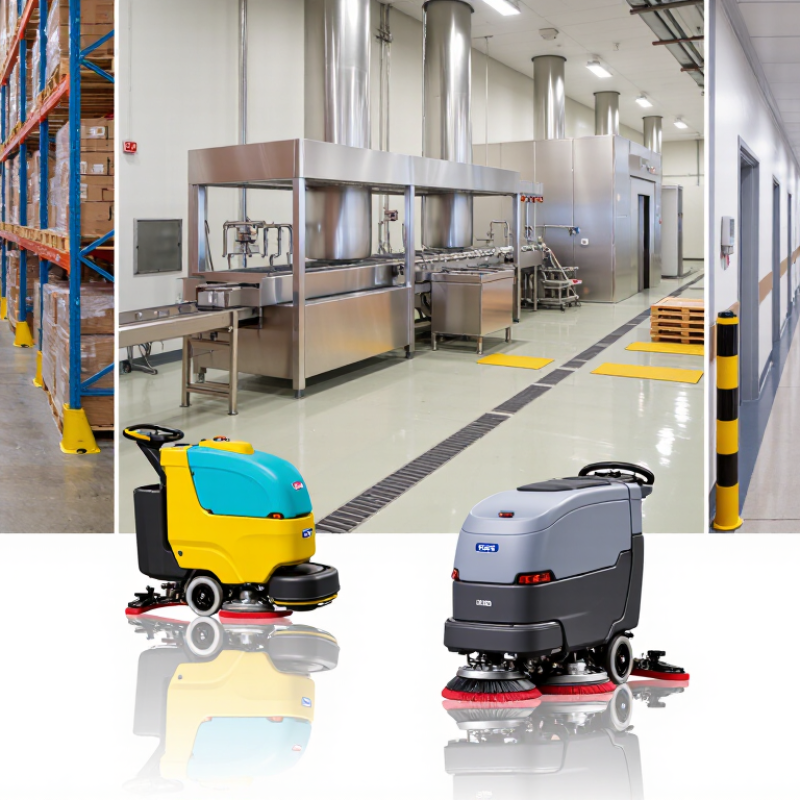
How to Choose an Industrial Floor Scrubber?
Choosing an industrial floor scrubber starts with the cleaning task, not the machine’s appearance. I inspect the site before comparing equipment. Dust, oil, food residue, and fine powder need different cleaning methods. A warehouse aisle may need daily dust removal, while a production area may require stronger degreasing. Record the cleaning frequency, floor size, aisle width, and available water supply. Note the expected cleaning time between work shifts. Small details matter.
Floor conditions also control the choice. Concrete can tolerate different brush pressure than coated epoxy. Uneven surfaces may need flexible brush movement and stronger water recovery. Cracks, slopes, expansion joints, and drainage points should be marked during inspection. A machine that leaves standing water can create slip risks and increase drying time. Check door widths, turning spaces, ramps, and storage areas. It must fit the building, not just the product sheet.
My first assessment is rarely perfect. A short site trial can reveal problems that measurements miss. Watch how the scrubber handles corners, dark stains, puddles, and tight aisles. Excessive pressure may damage a floor coating, while weak pressure leaves embedded soil behind. Review the pad or brush type, solution flow, battery runtime, noise level, and recovery performance. Ask operators about fatigue and visibility. Their practical experience often exposes overlooked cleaning requirements. Surface testing helps, too. Do not guess when the floor’s finish is uncertain.
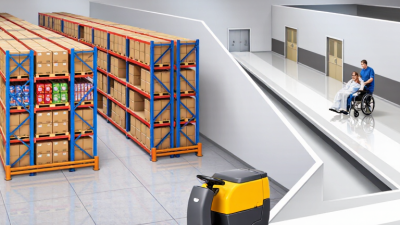
Choosing an industrial floor scrubber starts with soil, not machine appearance. Walk-behind units suit narrow aisles, frequent turns, and areas below 20,000 square feet. Ride-on scrubbers cover larger warehouses faster, but they need wider lanes and safer turning space. Compact cylindrical machines handle grout lines and textured concrete well. Disc systems usually perform better on smooth, sealed floors.
Size also affects labor and water use. A 20-inch deck can reach tight production zones, while a 32-inch deck improves output across open distribution floors. Grand View Research’s 2024 market analysis projects an 8.5% compound annual growth rate for commercial floor-cleaning machines through 2030. That growth reflects demand for productivity, not a universal need for larger equipment. Bigger is not always better.
Cleaning method matters. Use low-foam detergent, controlled solution flow, and strong recovery on oily concrete. Use cylindrical brushes when embedded grit collects in joints. Use disc pads for regular maintenance on polished surfaces. EPA’s WaterSense at Work guidance recommends measuring water use and selecting equipment with solution control. Operators should also record square feet cleaned per hour, recovery-tank fill time, and slip complaints. The numbers may expose an uncomfortable mistake: a powerful scrubber can waste labor when operators over-wet the floor or choose the wrong pad. Test a small section first. Watch the drying time.
| Scrubber Type | Typical Cleaning Width | Best Operating Environment | Typical Productivity | Power Source | Recommended Cleaning Method | Main Advantages | Key Limitations |
|---|---|---|---|---|---|---|---|
| Walk-Behind Disc Scrubber | 17–32 in (43–81 cm) | Warehouses, workshops, retail areas, schools, and medium-sized production spaces | Approximately 15,000–35,000 ft²/h (1,400–3,250 m²/h), depending on model and operator | Battery or corded electric | Regular wet scrubbing with a neutral or mildly alkaline detergent | Good maneuverability, even cleaning on smooth floors, and relatively simple operation | Lower performance on heavily textured floors and deep grout lines |
| Walk-Behind Cylindrical Scrubber | 20–34 in (51–86 cm) | Textured concrete, safety flooring, tile, and surfaces with debris or grout | Approximately 15,000–30,000 ft²/h (1,400–2,800 m²/h) | Battery or corded electric | Agitation with cylindrical brushes plus simultaneous debris collection | Handles uneven surfaces well and can collect small solid debris during scrubbing | Brushes may wear faster and may require more maintenance than disc systems |
| Ride-On Disc Scrubber | 28–40 in (71–102 cm) | Large warehouses, distribution centers, parking structures, and manufacturing plants | Approximately 35,000–80,000 ft²/h (3,250–7,430 m²/h) | Battery; some larger units use other industrial power systems | High-volume wet scrubbing with automatic solution dispensing and recovery | High coverage rate, reduced operator fatigue, and large solution and recovery tanks | Higher purchase cost, larger turning radius, and greater storage requirements |
| Ride-On Cylindrical Scrubber | 28–42 in (71–107 cm) | Large facilities with textured floors, embedded dirt, or frequent loose debris | Approximately 40,000–90,000 ft²/h (3,700–8,360 m²/h) | Battery | Heavy-duty agitation with pre-sweeping or integrated debris pickup | Strong soil removal, effective grout cleaning, and high productivity | More complex brush components and potentially higher maintenance costs |
| Compact Micro Scrubber | 12–20 in (30–51 cm) | Narrow aisles, offices, kitchens, washrooms, and congested production areas | Approximately 5,000–15,000 ft²/h (465–1,400 m²/h) | Battery or corded electric | Frequent light-to-medium scrubbing with quick drying | Small footprint, easy transport, and excellent access around furniture and equipment | Small tanks and narrow cleaning path reduce productivity on large open floors |
| Single-Disc Rotary Scrubber | 13–20 in (33–51 cm) | Spot cleaning, floor preparation, edges, workshops, and small commercial spaces | Approximately 3,000–10,000 ft²/h (280–930 m²/h) | Usually corded electric | Low-speed scrubbing, stripping, polishing, or pad-based floor preparation | Versatile accessory options and strong localized scrubbing action | Usually requires separate wet vacuuming; less suitable for large-area maintenance cleaning |
| Robotic Floor Scrubber | 20–32 in (51–81 cm) | Large, repeatable floor plans such as warehouses, airports, hospitals, and retail facilities | Varies by route, navigation, battery capacity, and obstacle density; commonly 15,000–45,000 ft²/h (1,400–4,180 m²/h) | Rechargeable battery | Scheduled low- to medium-intensity scrubbing with programmed routes | Consistent cleaning, reduced routine labor, and usage data in supported systems | Higher initial investment and reduced effectiveness in crowded or frequently changing layouts |
| Cleaning Method | How It Works | Suitable Soil Level | Best Floor Types | Water and Chemical Considerations | Drying Considerations |
|---|---|---|---|---|---|
| Routine Maintenance Scrubbing | Applies a controlled amount of solution, agitates the floor, and immediately recovers dirty water | Light to medium soil | Sealed concrete, vinyl, tile, terrazzo, and other water-resistant hard floors | Use the lowest effective flow rate and a detergent compatible with the floor finish | Generally fast drying when the recovery system and squeegee are properly adjusted |
| Deep Scrubbing | Uses increased brush pressure, slower travel speed, and sometimes repeated passes to remove embedded soil | Heavy soil, grease residue, and neglected floors | Durable concrete, textured safety flooring, and industrial tile | May require a suitable alkaline cleaner; follow floor and chemical safety instructions | Requires thorough water recovery to minimize slip hazards and residue |
| Stripping | Uses a stronger chemical solution and an aggressive pad or brush to remove floor finish | Built-up finish, wax, and coating layers | Only floors and coatings approved for stripping | Requires correct dilution, ventilation, PPE, and controlled wastewater disposal | The floor must be fully rinsed and dried before applying a new finish |
| Low-Moisture Cleaning | Uses limited solution, absorbent pads, or specialized encapsulation processes to reduce water use | Light soil where rapid reoccupation is important | Moisture-sensitive or frequently occupied areas, subject to floor compatibility | Lower water consumption, but the cleaning agent must be appropriate for the surface | Usually offers shorter drying times than conventional wet scrubbing |
Power source affects every hour of cleaning. Battery models reduce cable hazards and move easily between production areas. They also need charging time, battery care, and a clear replacement plan. Corded machines can work continuously, but outlets and cable management may slow operators. Fuel-powered units may suit large outdoor spaces, yet ventilation and noise require careful attention. Check real runtime under wet, heavy-duty conditions, not only the advertised figure.
Productivity depends on more than brush speed. Measure the cleaning path, tank capacity, water use, and emptying time. A wider brush can cover more floor, but it may struggle near shelving or narrow aisles. Recovery tanks should hold enough liquid for a full work section. Otherwise, frequent stops erase the expected time savings. Operator training matters too. An easy control panel can prevent poor passes and wasted detergent.
Maneuverability deserves a floor-level inspection. Test the scrubber around corners, dock plates, drains, and parked equipment. A tight turning radius helps in crowded spaces. Strong traction matters on damp ramps, but excessive weight can mark sensitive floors. Visibility around the brush deck is easy to overlook. It affects wall edges and collision risks. Some evaluations focus too heavily on theoretical coverage. That is a mistake. Watch an operator complete a typical route, then record actual cleaning time, fatigue, and missed areas. The result may challenge your first choice.
How to Choose an Industrial Floor Scrubber?
Safety should be checked before cleaning speed. The U.S. Bureau of Labor Statistics recorded 211,640 private-industry cases involving same-level falls in 2022. A scrubber should control water, not spread it. Look for strong suction, automatic solution control, bright warning indicators, and reliable emergency stops. Non-marking tires also matter on polished concrete. Test the machine on a real floor, including ramps and tight corners. A showroom demo can hide weaknesses.
Tips: Ask operators to test visibility, steering resistance, noise, and vibration. Check whether the recovery tank lifts easily. Confirm that batteries, squeegees, filters, and brushes are simple to inspect. Record daily checks with dates and initials. Short checklists are more useful than perfect manuals.
Maintenance needs are often underestimated. Inspect hoses for cracks, clean the recovery tank after every shift, and leave covers open for drying. Follow the manufacturer’s service intervals, but adjust them when dust, chemicals, or long shifts increase wear. NIOSH ergonomics guidance supports neutral working postures and reduced force. Choose adjustable handles, reachable controls, and a seat or platform that does not pressure the operator’s knees. Comfort is not decoration; fatigue can encourage rushed turns and skipped checks. No machine is perfect. An operator may still dislike it after ten minutes. That feedback deserves more attention than a sales specification.
Compare the three most important selection areas using a practical procurement score out of 100. Safety receives the highest weighting because industrial scrubbers operate around people, vehicles, water, and electrical equipment.
Evaluation guide: Safety features include emergency-stop access, operator-presence controls, visibility, warning alarms, and speed control. Maintenance needs cover daily cleaning, tank access, brush and squeegee replacement, and service accessibility. Operator comfort considers controls, noise, vibration, visibility, seating or handle design, and fatigue during long shifts.
Purchase price rarely shows the real cost of a floor scrubber. Calculate labor minutes, water, detergent, batteries, brushes, repairs, and downtime. The U.S. Department of Energy’s Operations & Maintenance Best Practices Guide links preventive maintenance with 12–18% lower costs than reactive maintenance. That figure is not guaranteed for every facility. Still, it exposes a costly habit: delaying simple service until production stops.
Durability depends on the working environment, not brochure language. Check the machine’s frame, wheel protection, tank material, brush pressure system, and battery access. In a dusty warehouse, sealed electrical components and washable filters may prevent repeated failures. Grand View Research estimated the global floor scrubber market at about $3.1 billion in 2023, showing strong demand for mechanized cleaning. Demand alone does not prove quality. Ask for expected service intervals and tested operating hours.
After-sales support can decide the total cost. Request written response times, local spare-parts availability, technician training, warranty exclusions, and battery replacement pricing. A low-cost machine with a three-week parts delay can become expensive quickly. Track cleaning speed, water use, repair frequency, and labor hours for ninety days. Then compare actual results with the original quotation. No spreadsheet is perfect. Some buyers also overlook operator training, which can cause uneven floors, excess chemical use, and premature brush wear. A practical trial on your dirtiest aisle may reveal more than a polished demonstration.