Inquiry
Form loading...

Why Choose Hand Push Floor Cleaning Machines?

Choosing the right floor-cleaning equipment can shape daily productivity, safety, and cleaning quality. Hand Push Floor Cleaning machines offer a practical option for small and medium-sized facilities. Operators guide the machine manually, while powered brushes and water systems handle repetitive work. This design suits retail aisles, schools, clinics, workshops, and office corridors. It also provides close control around shelves, doorways, and uneven floor transitions. You can see the cleaning path clearly. That matters.

In real use, performance depends on more than machine size or advertised brush speed. Floor material, debris type, aisle width, recovery capacity, and operator training all influence results. A compact scrubber may reach tight corners, yet its tank could require frequent refilling. A larger unit may cover more ground, but it can feel difficult in crowded spaces. Experienced cleaning teams test maneuverability, noise, drying time, and maintenance access before purchasing. Manufacturer specifications help, but measured trials provide stronger evidence. Keep records. They reveal useful patterns.

This guide examines why businesses choose Hand Push Floor Cleaning machines and where their limits appear. We will consider labor control, water use, surface protection, battery operation, and long-term upkeep. Reliable decisions should balance purchase price with service support, replacement parts, and expected workload. No machine solves every cleaning problem. That is worth admitting. A thoughtful evaluation may prevent unnecessary costs and disappointing results. When selected carefully, a hand-push machine can deliver consistent floors without demanding complex training or oversized equipment.

Why Choose Hand Push Floor Cleaning Machines?

What Are Hand Push Floor Cleaning Machines?

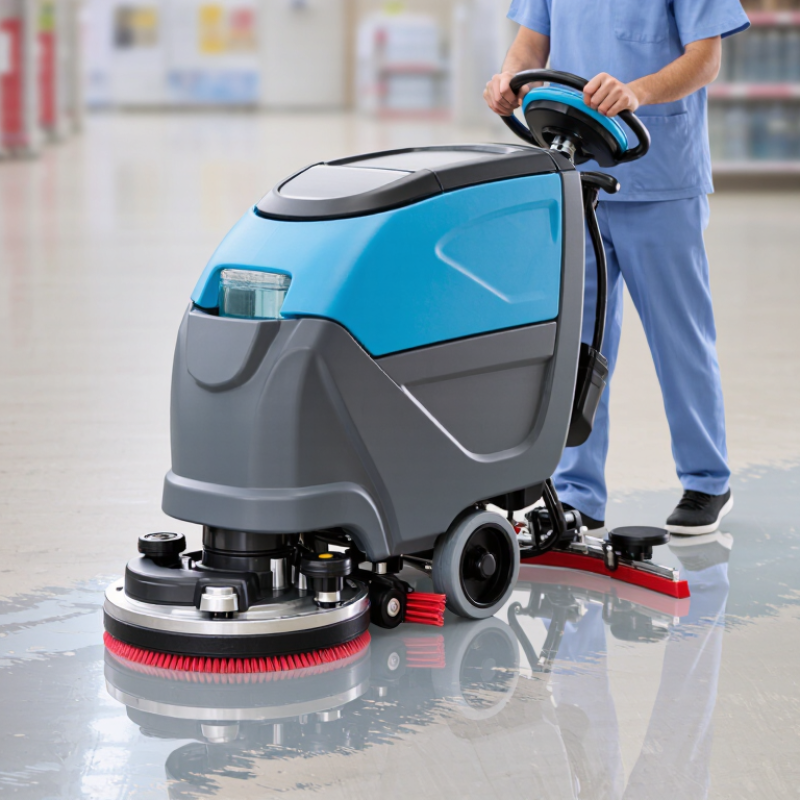
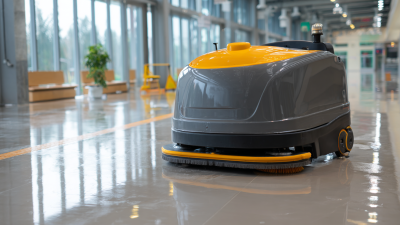
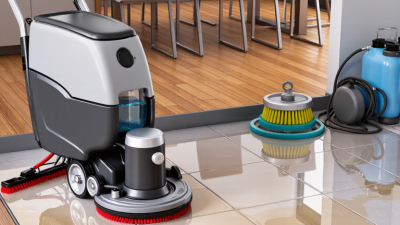
Hand push floor cleaning machines are compact devices designed for controlled cleaning without a riding seat. An operator walks behind the machine and guides it across the floor. Most models combine a water tank, rotating brush, suction system, and recovery tank. The brush loosens dirt, while the vacuum collects dirty water almost immediately.

These machines work well in supermarkets, workshops, schools, clinics, and busy corridors. Their narrow cleaning path can reach spaces that larger equipment cannot. A worker can steer around shelves, doorways, and fixed furniture with reasonable accuracy. Clean water is released near the brush, then pulled into the recovery tank. This process helps reduce slippery surfaces and limits unnecessary water use.

Not every floor needs this equipment. Very rough surfaces may require stronger brushes or repeated passes. Heavy debris should be removed before scrubbing. Otherwise, it can block the suction channel or reduce cleaning quality. I have also found that operator training matters more than expected. A rushed pass may leave damp lines behind. Small mistakes remain visible. Regularly checking brush wear, tank seals, and suction filters improves reliability. Still, these machines are not magic. Their results depend on suitable cleaning chemicals, correct pressure, and steady handling. A quieter motor may improve comfort, but it does not always guarantee better cleaning performance.

How Do Hand Push Floor Cleaning Machines Work?

Why Choose Hand Push Floor Cleaning Machines?

Hand push floor cleaning machines combine controlled movement with mechanical cleaning power. The operator guides the machine across the floor at a steady walking speed. Inside, rotating brushes loosen dust, grease, and dried spills from hard surfaces. A small tank releases clean water and measured detergent near the brush area. Too much solution creates waste.

The brush action does the scrubbing. A rear squeegee gathers the dirty water into a narrow path. Then, a suction motor pulls that water into a recovery tank. This leaves the floor noticeably drier than traditional mopping. On tile, concrete, or sealed stone, the operator can adjust brush pressure and water flow. These controls matter near walls, corners, and uneven patches.

Small details affect real performance. Emptying the recovery tank prevents odors and protects suction strength. Clean squeegee blades also reduce streaks. I have found that rushing causes missed strips, especially under shelves. Slow passes usually clean better, but they take more time. That trade-off is easy to underestimate. Operators should check the floor type before increasing pressure, because delicate finishes may scratch or lose their sheen. A practical routine includes inspecting brushes, charging the power source, and testing a small area first. The machine is helpful, not automatic. Skill still matters.

Which Floor Types and Areas Suit These Machines?

Hand push floor cleaning machines suit many hard-floor surfaces and controlled indoor areas. They work best where dirt, spills, and foot traffic appear regularly.

On ceramic tile, rotating brushes can reach shallow grout lines and remove tracked-in soil. Sealed concrete tolerates stronger scrubbing, especially in workshops, storage rooms, and building entrances. Terrazzo also responds well when operators use suitable pads and moderate pressure.

Vinyl flooring needs gentler settings to protect its surface finish. Carpet is different. These machines are usually unsuitable unless the equipment specifically supports carpet cleaning.

Retail aisles, office corridors, school hallways, and small warehouses are practical locations. Their compact design helps operators clean around shelves, doors, and fixed furniture. They also work well in restaurants after loose debris is removed. In clinics or care facilities, operators should follow site hygiene procedures and use approved cleaning solutions. Narrow spaces can still cause problems. Measure turning areas before purchase.

Surface condition matters more than floor appearance. An unsealed stone floor may absorb water and develop marks. Damaged grout can loosen under aggressive brushing. I once saw a clean-looking floor become dull after excessive chemical use. That mistake was avoidable. Test a small hidden section first, then adjust brush pressure, water flow, and walking speed. A hand push machine saves effort, but it still depends on trained handling and regular maintenance.

What Benefits Do Hand Push Floor Cleaning Machines Offer?

Hand push floor cleaning machines offer practical gains in busy facilities.

Their rotating brushes loosen embedded soil, while controlled water flow reduces puddles. Operators can clean aisles, corridors, and tiled rooms with fewer repeated passes. Less bending, fewer buckets.

865

fatal workplace injuries from falls, slips, and trips in 2022.

The U.S. Bureau of Labor Statistics reported 865 fatal workplace injuries from falls, slips, and trips in 2022. This figure does not prove that machines prevent accidents. It does show why faster drying deserves attention.

A well-adjusted machine leaves less standing water around entrances and service areas. Workers also avoid carrying heavy solution containers across large floors. That detail matters during long shifts.

Energy and water use still require careful control.

The U.S. Environmental Protection Agency recommends efficient cleaning practices that limit unnecessary chemical and water consumption. Hand push equipment supports this approach when operators match pressure, brush type, and solution volume to the surface.

Real-world results vary.

Rough concrete may need slower movement, while polished flooring can become streaked if the recovery system is poorly maintained.

Training remains essential.

A short trial on one corridor can reveal noise, maneuverability, and drying problems before wider use.

Regular inspection of squeegees, batteries, and brushes also protects performance and operating costs.

What Factors Should Buyers Consider Before Choosing One?

Choosing a hand push floor cleaning machine starts with the building, not the brochure. Measure aisle width, floor texture, doorway clearance, and daily cleaning area. A compact model may turn easily around shelving, while a wider deck can reduce passes in open corridors. Noise matters. Check the machine on the actual floor.

The U.S. Bureau of Labor Statistics reported about 2.4 million janitor and building cleaner jobs in 2023, with employment projected to grow through 2033. Labor efficiency therefore deserves careful attention. Compare cleaning width, forward speed, brush pressure, tank capacity, and recovery performance. Grand View Research’s 2024 commercial cleaning equipment report projected market growth of roughly 6.8% annually through 2030, reflecting stronger demand for measurable productivity. Still, a larger machine is not automatically better.

Battery runtime should cover the planned shift, including charging delays and heavily soiled areas. Ask about charging time, battery replacement cost, and disposal procedures. Inspect squeegee blades, brushes, filters, wheels, and recovery tanks. Can an operator replace them without special tools? That detail affects downtime. Do not guess.

Ergonomics also requires a real trial. OSHA recommends reducing forceful pushing, awkward postures, and repetitive handling where possible. I have seen operators choose high capacity tanks, then struggle with turning and emptying them. The machine looked efficient. It was not. Consider training time, storage space, water use, warranty terms, service access, and total cost over several years. A quiet, balanced machine may outperform a faster model in occupied buildings.

Why Choose Hand Push Floor Cleaning Machines? - What Factors Should Buyers Consider Before Choosing One?

Typical specifications and selection benchmarks for commercial hand-push floor cleaning machines. Actual performance varies with machine design, floor condition, operator skill, and cleaning solution.
Buyer Consideration Typical Range or Benchmark Why It Matters What Buyers Should Check
Recommended Floor Area Small to medium commercial areas, generally up to about 3,000 m² per cleaning cycle Hand-push machines are easier to maneuver than ride-on equipment in compact or congested spaces. Compare the machine’s practical coverage rate with the area that must be cleaned during each shift.
Cleaning Path Width Approximately 35–85 cm for common walk-behind scrubbers and sweepers A wider path can reduce cleaning passes, while a narrower path improves access around shelves, furniture, and doorways. Measure the narrowest aisle, doorway, elevator, and turning area before selecting the cleaning width.
Practical Cleaning Productivity Roughly 800–3,000 m² per hour, depending on width, speed, turning, refilling, and floor conditions Practical productivity is lower than theoretical brush-width calculations because operators must slow down, turn, refill, and overlap passes. Request a practical coverage figure rather than relying only on the maximum travel speed or brush width.
Power System Battery-powered models offer cordless operation; corded models provide continuous operation where outlets are available. Battery machines reduce cable hazards, while corded machines avoid charging downtime. Consider outlet locations, cable management, charging facilities, battery replacement cost, and daily operating hours.
Typical Battery Runtime Approximately 1.5–5 hours of active cleaning, depending on battery capacity, brush pressure, and operating mode Runtime determines whether the machine can complete a shift without an additional battery or charging break. Check whether the stated runtime includes brushing, solution flow, vacuum recovery, and normal load conditions.
Solution Tank Capacity Approximately 10–80 L for common hand-push floor scrubbers A larger tank can reduce refilling frequency but increases machine weight and handling requirements. Balance tank size with water access, lift or elevator limits, storage space, and the required cleaning route.
Recovery Tank Capacity Usually similar to or slightly larger than the solution tank; commonly about 15–90 L The recovery tank collects used water and debris, helping prevent repeated emptying during a cleaning task. Look for a removable lid, wide drain hose, level indicator, and easy access for daily rinsing.
Brush or Pad Pressure Adjustable pressure is preferable; light pressure suits routine cleaning, while higher pressure suits heavier soil. Correct pressure improves soil removal while reducing unnecessary pad, brush, water, and energy consumption. Confirm that pressure can be adjusted without tools and that the machine supports the required brush or pad types.
Floor Compatibility Commonly suitable for sealed concrete, vinyl, ceramic tile, terrazzo, and other water-resistant hard floors when the correct pad is used. Different flooring materials require different brush materials, pad grades, pressure levels, and chemical compatibility. Verify the flooring manufacturer’s cleaning instructions and test the machine in an inconspicuous area.
Noise Level Many commercial walk-behind machines operate at approximately 60–75 dB(A), depending on the operating mode. Lower noise is useful in hospitals, schools, offices, hotels, and other occupied areas. Check the measured noise rating and test the machine in the environment where it will be used.
Maneuverability Compact footprints, balanced handles, smooth steering, and a small turning envelope are desirable for crowded areas. Good maneuverability reduces missed areas, operator fatigue, and the risk of contacting walls or fixtures. Test turning, reversing, threshold crossing, handle adjustment, and storage access with the tanks filled.
Water and Chemical Efficiency Adjustable solution flow and automatic shut-off when the machine stops are useful efficiency features. Controlled water and detergent use can reduce operating costs, drying time, and wastewater volume. Check flow settings, detergent dosing options, drain design, and compatibility with the chemicals used on site.
Drying Performance A properly adjusted squeegee and effective vacuum recovery should leave only a thin residual film on a suitable floor. Better water pickup reduces slip risk and allows the cleaned area to return to service sooner. Inspect squeegee width, blade replacement, vacuum strength, hose connections, and performance on uneven floors.
Operator Ergonomics Adjustable handle height, intuitive controls, low vibration, and manageable push force are important for repeated use. Ergonomic controls can reduce fatigue and improve consistency across different operators. Have intended operators perform a short trial and assess controls, visibility, grip comfort, and push effort.
Machine Weight and Transport Compact units may weigh under 50 kg; larger battery-powered units can exceed 100 kg when equipped with tanks and batteries. Weight affects handling, loading, elevator use, ramp safety, and storage requirements. Confirm loaded weight, ramp limits, transport handles, parking brake design, and whether the machine can pass through all access points.
Maintenance and Total Cost Routine tasks normally include emptying and rinsing tanks, cleaning filters, inspecting squeegee blades, and charging or maintaining batteries. Simple maintenance helps protect cleaning performance and reduces avoidable downtime over the equipment’s service life. Evaluate purchase price, consumables, batteries, service access, spare-part availability, training, warranty terms, and expected annual usage.