
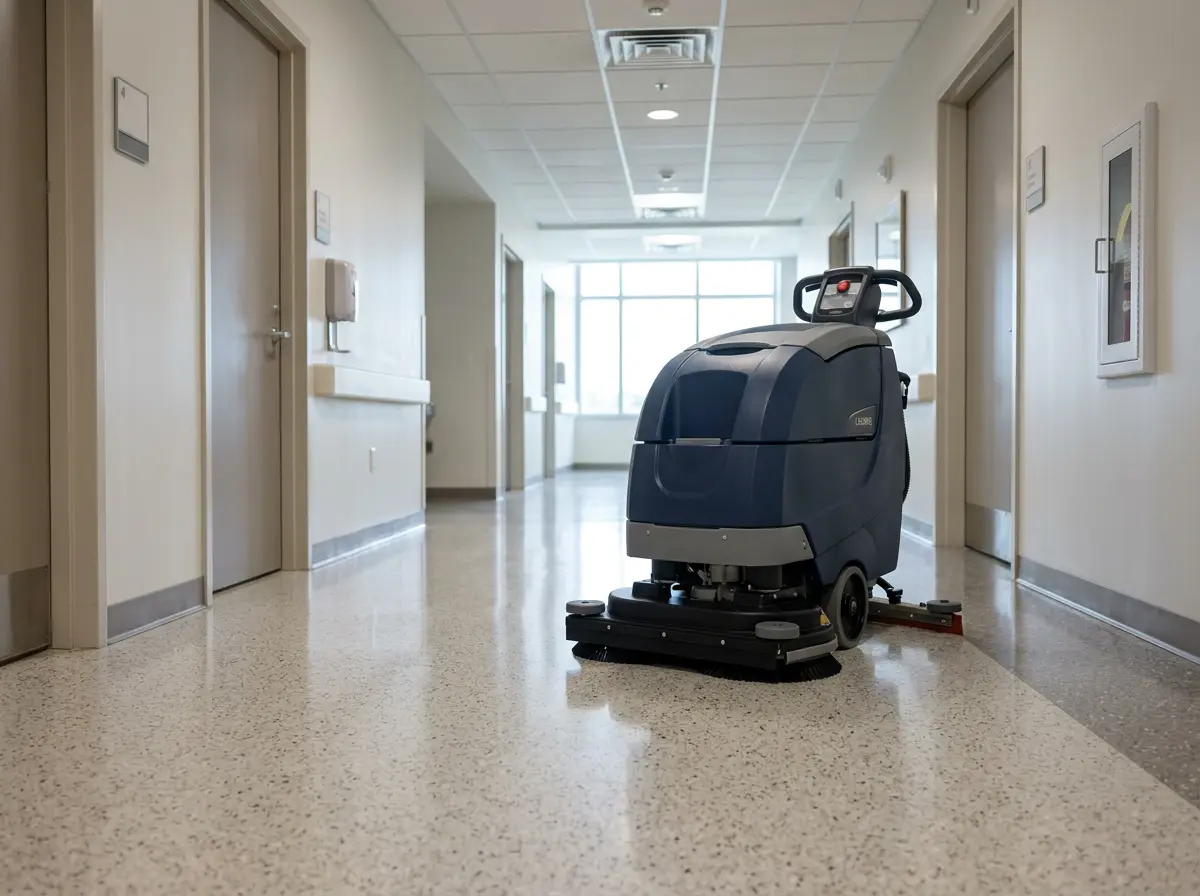
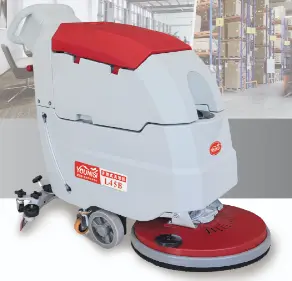
Why is the Walk-behind Silent Scrubber L520BQ ideal for hospitals and libraries?
The Walk-behind Silent Scrubber L520BQ is well suited to hospitals and libraries because this equipment category combines compact maneuverability, controlled water recovery and reduced operating noise. These qualities support cleaning in corridors, patient areas, reading rooms and other occupied spaces. Before purchase, confirm the L520BQ's measured sound level, cleaning path, battery runtime, recovery performance and compatible brushes with the supplier.
- A low noise Floor Scrubber can reduce disruption in quiet public and healthcare environments.
- A walk-behind design is easier to control in narrow corridors, rooms and irregular layouts than a large ride-on machine.
- Fast water recovery is essential because clean, dry floors help reduce disruption and slip risk.
- Hospitals should evaluate sound, maneuverability, sanitation procedures, battery runtime and service access together.
- Libraries need quiet operation, compact storage and careful cleaning around shelves, study areas and furniture.
The Walk-behind Silent Scrubber L520BQ addresses a practical facilities-management problem: how to clean hard floors thoroughly without creating excessive noise, obstructing traffic or leaving standing water. Hospital guidance from equipment specialists commonly emphasizes sound level, cleaning path, battery runtime and recovery performance as core selection criteria. For context, Lavor describes a compact Walk-Behind Scrubber for rooms up to 1,500 m2, while the actual L520BQ specification should be verified independently before procurement.
Why low noise matters in hospitals and libraries
Low operating noise is valuable because cleaning often takes place while patients, staff, students and visitors are still present. In a hospital, unexpected machine noise can interfere with conversations, rest, clinical work and sensitive areas such as consultation rooms. In a library, it can interrupt reading, study and research. Healthcare floor-care guidance from Minuteman identifies sound level as a key factor when evaluating scrubbers for healthcare facilities.
A silent floor scrubber does not mean that every operating sound disappears. The useful purchasing question is whether the machine produces an acceptable measured sound level under the intended operating conditions. Ask for the test method, measurement distance, operating mode and whether the vacuum motor and brush system were running during the test. A quoted value without test conditions is difficult to compare across brands.
| Evaluation item | Numerical information to request | Why it matters |
|---|---|---|
| Operating sound | Sound level in dB(A) | Helps determine suitability for occupied wards, reading rooms and offices. |
| Coverage | Cleaning path in mm | Shows how efficiently the machine can clean corridors and open floor areas. |
| Productivity | Rated cleaning area in m2/h | Supports realistic staffing and scheduling calculations. |
| Battery endurance | Runtime in minutes | Indicates whether a shift can be completed without an interruption for charging. |
| Water recovery | Tank capacity in L and residual water after a pass | Helps assess drying performance and refill frequency. |
Published figures must be treated as model-specific evidence rather than assumptions. For comparison, one unrelated healthcare floor-scrubber guide reports a 67 dB operating figure for its featured machine, but that number should not be transferred to the L520BQ unless the L520BQ manufacturer provides the same measurement.
Why the walk-behind format fits hospital layouts
A walk-behind machine is effective in hospitals because the operator can steer it through constrained spaces and change direction quickly. Hospitals commonly contain patient corridors, treatment rooms, lifts, waiting areas, washrooms and door thresholds that do not suit a large ride-on scrubber. Hospital scrubber selection guidance from Gadlee similarly distinguishes compact walk-behind machines for narrow patient areas from ride-on machines intended for larger open floors.
Control is more important than maximum size when the route includes beds, carts, chairs, visitors and equipment. The operator should be able to approach edges without repeated manual mopping, maintain a consistent pace and park the machine without blocking an emergency route. A compact footprint also makes it easier to move the unit between floors, although the buyer should verify the machine's width, turning radius, weight and lift compatibility.
- Measure the narrowest corridor, doorway and lift entrance.
- Mark fixed obstacles, sharp turns, ramps and areas where people commonly queue.
- Compare the machine's overall width and turning behavior with the route, not only its brush width.
- Confirm that the recovery hose, squeegee and tanks can be accessed without dismantling the main body.
- Run a supervised trial during a normal operating period to assess noise, visibility and operator control.
How scrubbing, recovery and drive systems work together
The core value of a scrubber dryer comes from coordination among the brush system, water-recovery system and drive system. The brush or pad loosens soil, the solution carries suspended dirt away from the surface, and the squeegee with suction motor collects the liquid. The drive system then keeps the machine stable and predictable as it moves through the route.
Recovery performance is especially important in hospitals and libraries because residual water can create a temporary hazard and may require a second manual pass. The suction motor, squeegee assembly and squeegee blades must remain clean, correctly adjusted and free from damage. A machine that scrubs well but leaves visible water is not delivering a complete floor-care result.
| System | Key components | Numeric checks for procurement | Operational question |
|---|---|---|---|
| Scrubbing | Brush motor, brush head, pad holder | Brush diameter in mm; brush speed in rpm if published | Can the floor type and soil load be handled without damage? |
| Recovery | Suction motor, squeegee, blades | Recovery tank in L; vacuum rating if published | Is the floor acceptably dry after one pass? |
| Drive | Traction or push-assist system | Travel speed in km/h; slope rating if published | Can the operator maintain a controlled pace safely? |
| Battery | Battery pack and charger | Voltage, capacity in Ah and runtime in minutes | Does the duty cycle fit the cleaning schedule? |
These values should come from the L520BQ technical sheet or a witnessed demonstration. If a value is not published, treat it as an open procurement question rather than filling the gap with a figure from another model.
Hospital and library use cases
The machine is most useful when the cleaning plan separates routine floor care from infection-control procedures. A scrubber can improve soil removal and water pickup on compatible hard floors, but it does not replace approved disinfectants, contact times, color-coded tools, hand hygiene or site-specific healthcare protocols.
Hospitals
Hospitals should prioritize predictable operation, cleanable components and rapid floor recovery. Use the machine on approved resilient or hard flooring after removing loose debris and checking that the selected chemical is compatible with the floor and equipment. Keep contaminated-area procedures separate from public-area procedures, and establish a documented process for emptying, rinsing and drying recovery tanks.
Libraries
Libraries should prioritize quiet scheduling, maneuverability and protection of furniture, shelving and flooring. Operators should use low-splash settings where available, avoid wetting carpet transitions and maintain a route that keeps cables, books, carts and visitors clear. Early-morning or evening cleaning can further reduce disruption, even when the machine itself is quiet.
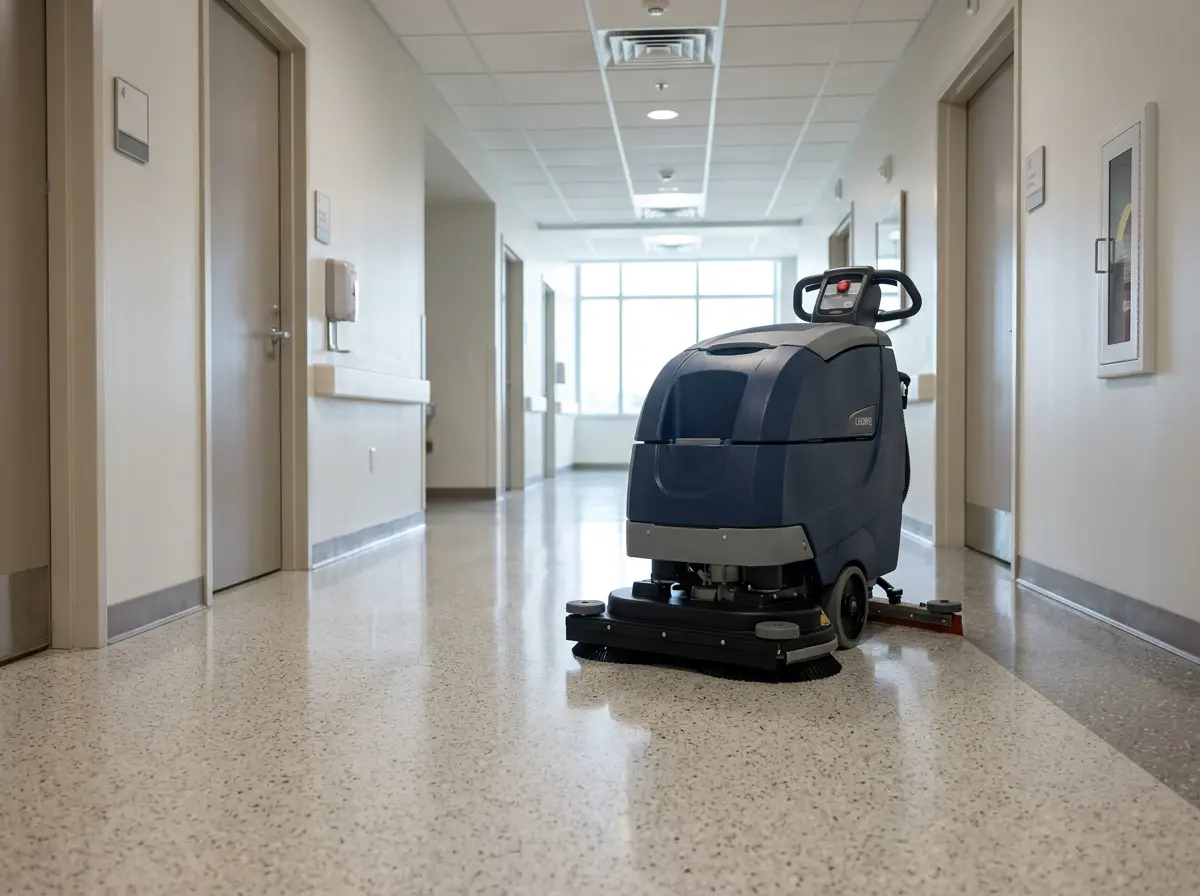
Quiet equipment is not automatically suitable for every floor. Natural stone, coated surfaces, textured safety flooring and sealed concrete may require different pads, brushes, chemical concentrations and pressure settings. Confirm compatibility through the flooring manufacturer or a controlled test patch.
How to verify whether the L520BQ is the right purchase
The best decision comes from a site trial and a written specification comparison rather than the word “silent” alone. Nilfisk's walk-behind scrubber information also illustrates why quiet operation, maneuverability and operating conditions belong in the same evaluation.
- Noise: request a model-specific dB(A) measurement and test conditions.
- Route fit: measure doors, corridors, lifts, turning zones and storage locations.
- Drying: observe water pickup on the actual floor, including turns and uneven transitions.
- Endurance: compare verified runtime with the planned cleaning cycle, allowing for stop-start work.
- Maintenance: inspect access to tanks, filters, squeegee blades, brushes and batteries.
- Service: confirm spare-part availability, operator training and response arrangements.
For larger facilities, calculate whether the machine's rated area coverage is realistic after allowing for obstacles, refilling, emptying and movement between zones. Lavor's published example of a walk-behind model for areas up to 1,500 m2 demonstrates that application-area claims are normally tied to a specific model and should not be generalized to the L520BQ.
Maintenance practices that protect quiet performance
Routine maintenance preserves both cleaning quality and noise control. A blocked filter, worn squeegee blade, loose cover, damaged brush or poorly maintained suction path can increase vibration and reduce water recovery.
- Remove debris from the brush and squeegee after each operating cycle.
- Rinse recovery and solution tanks according to the equipment manual.
- Inspect blades for wear, curling, cuts and loss of contact with the floor.
- Check suction hoses and filters for blockages before troubleshooting the vacuum system.
- Charge and store the battery using the specified charger and site safety procedure.
- Record abnormal sound, vibration, reduced runtime or poor drying for service review.
Frequently asked questions
1. Is the Walk-behind Silent Scrubber L520BQ suitable for hospital corridors?
It can be suitable when its width, turning radius, sound level, recovery performance and floor compatibility match the corridor. A site trial is recommended before purchase.
2. Is a low noise floor scrubber always better for a library?
Not automatically. Noise is important, but the machine must also recover water effectively, avoid furniture damage, fit the route and support practical maintenance.
3. Does quiet operation prove that a machine is safe for healthcare use?
No. Quiet operation addresses environmental disruption. Healthcare suitability also depends on cleaning chemicals, procedures, operator training, infection-control policy and floor compatibility.
4. What sound level should buyers request?
Request a dB(A) value measured under stated conditions, including the operating mode and measurement distance. Do not compare unexplained figures as if they were equivalent.
5. Can this type of scrubber replace manual cleaning?
It can reduce manual scrubbing and water-pickup work on suitable open floor areas, but edges, corners, stairs, spills and infection-control tasks may still require manual methods.
6. How do I choose brushes or pads?
Match the brush or pad to the flooring material, coating and soil type. Confirm the diameter, drive holder and approved accessories with the supplier before ordering.
7. What should be confirmed before ordering the L520BQ?
Confirm the current technical sheet, dB(A) rating, cleaning path, tank capacities, battery specification, runtime, machine dimensions, warranty, spare parts and service support.
About Younis and next steps
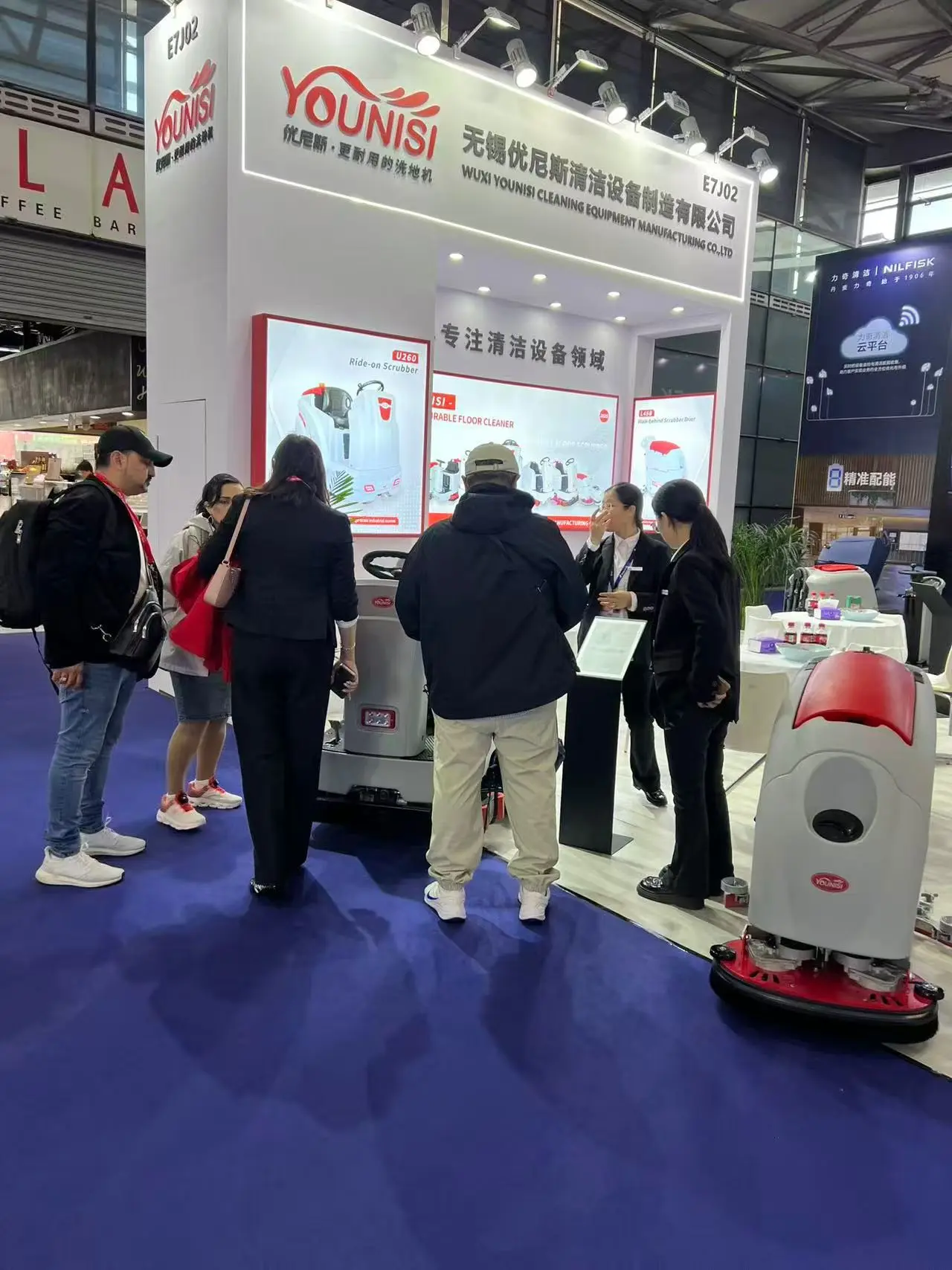
Younis is a cleaning-equipment manufacturer based in Wuxi, China, offering research, production, sales and service for floor-cleaning equipment. Its supplied company profile states 19 years of equipment-manufacturing experience and experience serving more than 20,000 customers; buyers should request current documentation for the specific model and market. For the L520BQ, ask for a complete specification sheet, floor trial, accessory list and maintenance guidance before making a hospital or library procurement decision.
