Inquiry
Form loading...

7 Tips for Buying a Concrete Floor Scrubber

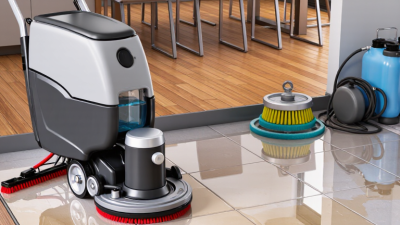
A Concrete Floor Scrubber can turn a dusty, labor-intensive cleanup into a controlled daily routine. But the right machine depends on more than its price tag. Consider the floor’s texture, the amount of grit, available storage, water recovery, and the time staff can spend operating it. A polished warehouse aisle and a rough loading bay need different cleaning approaches.

Market research offers useful context, though it is not a buying guide. Grand View Research’s Floor Cleaning Machines Market report estimated the global market at about $5.5 billion in 2022 and projected continued growth through 2030. That broad category includes many machine types, so the figure should not be mistaken for scrubber-only sales. Still, it points to a growing investment in mechanized floor care. Details matter.

Before comparing models, walk the actual site. Look at tight turns, floor drains, door thresholds, and the muddy strip near the entrance. Then compare cleaning width, battery runtime, tank capacity, brush options, noise, and service access. A low purchase price can become expensive if parts are difficult to source or the machine sits idle. An expert quotation also deserves careful checking: no source article or verified quotation was supplied here, so attributing a direct statement to a named specialist would risk misrepresentation. The tips ahead focus on practical checks buyers can confirm with manufacturers, dealers, and an on-site demonstration. A showroom floor is not your floor.
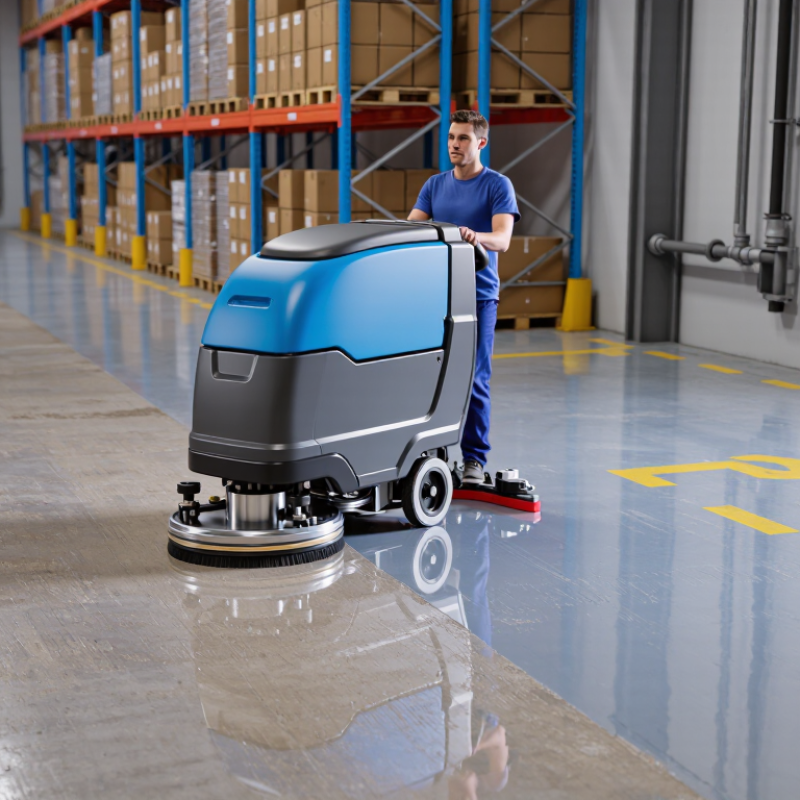
7 Tips for Buying a Concrete Floor Scrubber

Define Your Cleaning Needs and Concrete Floor Conditions

Tip: Walk the floor before comparing machines. Measure the area, note narrow aisles, and check for drains, ramps, or tight turns. Concrete condition matters too. A smooth, sealed slab usually needs less aggressive scrubbing than rough, porous concrete. Look for cracks, worn coating, and uneven patches; these can affect water pickup and brush contact. Dust changes everything.

Tip: Identify what the scrubber must remove. Fine dust, tracked-in grit, oily residue, and dried spills call for different cleaning approaches. Note how often the floor gets dirty and whether cleaning happens during busy hours. For frequent work, compare tank capacity and battery runtime with the actual area and refill access. A large tank is not useful if the machine cannot pass through a doorway.

Tip: Match the machine to the floor, not just its advertised coverage. Brush pressure, pad type, and solution flow should suit the concrete finish and soil level. Too much pressure can wear a coating; too little may leave embedded grime. Ask for a demonstration on a small, representative patch. Start small. Check for streaks, leftover water, and missed edges, then adjust the cleaning plan. Real floors are rarely as uniform as a product sheet suggests.
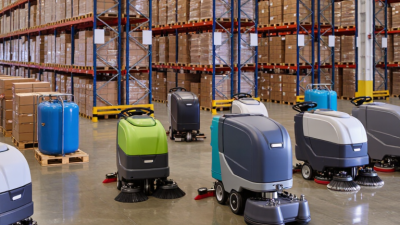
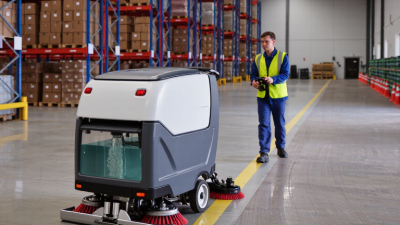
Compare Walk-Behind, Ride-On, and Autonomous Scrubbers

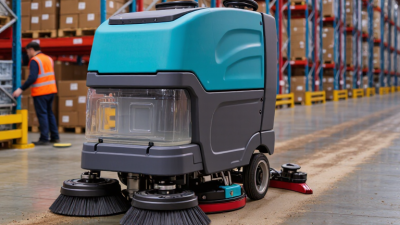
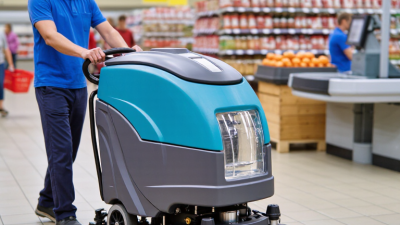
Choose a scrubber by the shape of your concrete floor, not just its total area. A walk-behind model suits narrow aisles, crowded work areas, and frequent turns. The operator can guide the brush around racks and inspect spills closely. But cleaning a large warehouse this way takes time and physical effort. Small rooms matter. Check doorway widths, turning space, and where the machine will be stored.

Ride-on scrubbers cover broad, open floors faster and reduce operator fatigue during long shifts. They need wider paths and clear sightlines, so tight corners may still require hand cleaning. Autonomous scrubbers can follow mapped routes and clean during quieter periods, but they need consistent floor conditions and occasional supervision. Cables, pallets, wet patches, and changing layouts can interrupt a route. Not magic.

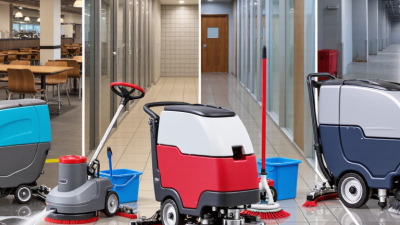
Compare each option on the same test area: note cleaning time, water use, missed edges, and how easily the recovery tank empties. I would not assume the largest or newest machine is best; a machine that barely fits through a doorway can become an expensive obstacle. Before buying, ask operators to try the controls and check whether routine maintenance feels manageable.

Evaluate Cleaning Width, Tank Capacity, Power, and Maneuverability

A concrete scrubber should match the floor, not just the building’s total area. ISSA’s 612 Cleaning Times reference organizes cleaning benchmarks by task and area, including floor-care work. Use its square-footage approach to compare estimated coverage with your actual route, obstacles, and turnaround time. Cleaning width matters: a wider deck can cover open aisles quickly, but may struggle between shelving or around tight corners. Measure the narrowest doorway and aisle before choosing.

Tip: Check tank capacity against the distance between refill points. A large tank reduces stops, but adds weight when full and can make turns harder. Compare rated runtime with a full shift’s planned use; battery output may change with brush pressure and floor condition. Test the machine on a damp patch and a dry patch. The difference can be telling.

Tip: Prioritize maneuverability and power together. A compact scrubber with adequate brush pressure may outperform a wider unit in crowded rooms. Look for a clear view of the squeegee, responsive controls, and easy access to the recovery tank. Ask for a supervised trial on your own concrete; showroom floors are unusually forgiving. I would also record area cleaned per hour and water refills during the trial, then compare those figures with ISSA’s task-based benchmarks. Real routes are messy, and estimates can miss that.

7 Tips for Buying a Concrete Floor Scrubber - Evaluate Cleaning Width, Tank Capacity, Power, and Maneuverability

Tip What to Evaluate Practical Buying Guide Why It Matters on Concrete
1. Match the cleaning width to the floor area Scrubbing-path width and squeegee width Walk-behind models commonly have a scrubbing path around 17–28 inches; ride-on models are often wider, roughly 26–36 inches. Check that the squeegee is wide enough to collect the solution from the scrubbed path. A wider path can reduce passes across open floors, while a narrower machine is easier to use around racks, columns, and tight aisles.
2. Choose tank capacity for the job size Solution and recovery tank capacities Walk-behind machines may have tanks in the approximate 10–20 gallon range; larger ride-on units may hold about 20–40 gallons or more. Compare both tanks, since the recovery tank may fill before the solution tank is empty. Larger tanks can mean fewer refill and dump stops, but they also add weight and may make the machine harder to handle when full.
3. Check the power source and operating time Battery type, voltage, charging time, and rated run time Battery-powered scrubbers are available with lead-acid or lithium-ion batteries. Ask for run time under typical scrubbing conditions, not just an ideal or no-load estimate, and confirm whether the battery can cover a full cleaning shift. Battery operation avoids an exhaust plume at the point of use. A spare battery or suitable charging plan can help reduce downtime on large jobs.
4. Select brushes or pads for the concrete finish Brush or pad compatibility, pressure settings, and replacement availability Confirm that the machine accepts suitable brushes or pads for the surface and soil level. Use a less aggressive option for sealed or polished concrete and a more suitable scrubbing setup for durable, heavily soiled concrete; test an inconspicuous area first. Concrete finishes vary. An overly aggressive brush or pad can damage a coating or alter the appearance of a finished surface.
5. Assess maneuverability and turning space Machine dimensions, turning radius, steering, and visibility Measure doorways, aisle widths, elevator openings, and storage areas before buying. For congested spaces, compare compact walk-behind models; for broad, unobstructed floors, consider whether a ride-on model can turn comfortably. Good maneuverability helps operators clean close to edges and around obstacles without repeated repositioning or leaving untreated areas.
6. Compare water recovery and drying performance Squeegee design, vacuum performance, and recovery on turns Look for a squeegee that follows the floor evenly and is easy to adjust or replace. If possible, test the machine on the actual concrete, including turns and transitions, and inspect for residual water after a pass. Effective recovery helps leave the floor drier, which can reduce slip risk and make the area available sooner.
7. Calculate real productivity and service needs Working speed, refill time, maintenance access, and parts support Use the stated coverage rate as a comparison, not a guaranteed result: walls, obstacles, soil level, turning, and tank stops lower actual output. Check how easily operators can clean tanks and filters, replace squeegee blades, and obtain routine service. A machine that is easy to maintain and supported with common wear parts can spend more time cleaning and less time out of service.

Specifications vary by model and operating conditions. Treat the ranges above as general selection guides, and verify dimensions, capacities, run time, and surface compatibility before purchase.

Check Durability, Maintenance Needs, and Total Ownership Costs

7 Tips for Buying a Concrete Floor Scrubber

Tip 1: Inspect the parts that take daily wear. Check the squeegee blades, brush deck, wheels, and recovery tank for sturdy construction and easy replacement. Ask for service records if considering a used machine. A scrubber that looks solid may still hide worn seals.

Tip 2: Check routine maintenance before comparing prices. Can an operator reach the filters, drain hose, and battery connections without tools? The U.S. Department of Energy’s Operations & Maintenance Best Practices Guide reports that effective building maintenance programs can save 5–20% on energy bills. That figure is not specific to scrubbers, but it highlights why neglected equipment can cost more over time. Keep the manual and a simple maintenance log.

Tip 3: Calculate total ownership costs, not just the purchase price. Include batteries, brushes, squeegees, detergent, water, labor, and expected repairs. For a realistic estimate, track how long a machine takes to clean a familiar area, including refill and dump stops. Small delays add up.

Tip 4: Match capacity to the floor and crew. A large tank may reduce refill trips, yet a bulky machine can struggle around columns and narrow aisles. Ask for a supervised test on your actual concrete. Notice the dried floor, the noise, and how quickly the operator can change a blade. A few details are easy to miss.

Test Cleaning Performance and Review Safety, Warranty, and Support

Ask for a live cleaning test on flooring similar to yours, not a spotless showroom surface. Use a measured area with tracked-in grit, dried marks, and narrow edges. Watch how many passes the scrubber needs, whether dirty water is recovered, and if the floor dries evenly. Small details matter. A shiny patch can hide a damp strip that becomes slippery minutes later.

Check safety features during the demonstration. Test the emergency stop, confirm controls are reachable, and look for clear visibility around the cleaning head. Ask how the machine handles ramps, tight turns, and wet-floor transitions. Read the operating instructions before testing chemicals or changing brushes. A rushed demo can miss problems; I would not treat one clean pass as proof of safe daily use.

Review warranty terms in writing, including coverage for batteries, brushes, labor, and wear parts. Ask how long common replacement parts usually take to arrive, and whether technicians can help troubleshoot remotely. Not always. Support quality may depend on your location and the machine’s age, so confirm the process before purchase. Keep the contact details, maintenance schedule, and service records together. A small paperwork gap can become an expensive delay.

7 Tips for Buying a Concrete Floor Scrubber

Compare the key factors to test before choosing a machine.

Checklist scores are illustrative priorities, not product ratings or measured industry results. Test cleaning performance on representative concrete, and verify floor compatibility, maneuverability, runtime, water recovery, safety features, warranty terms, and service support before buying.